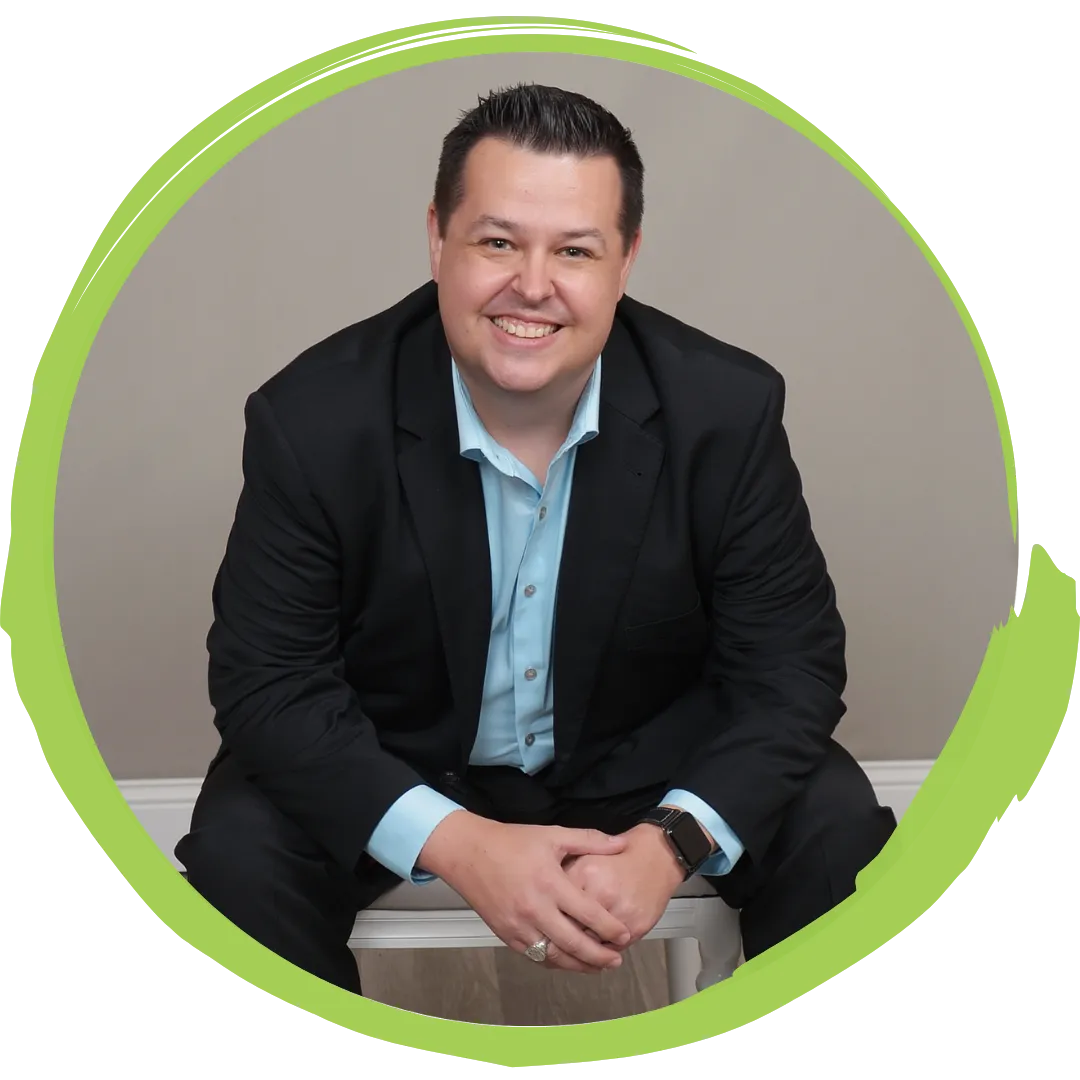
I Build Companies Worth Owning and Leaders Worth Following.
I Build Companies Worth Owning and Leaders Worth Following.
A business growth ecosystem equipping Founders, Investors, and Operators with the systems, tools, capital, and support to build profitable, self-sustaining companies.
Latest
Blog Articles.
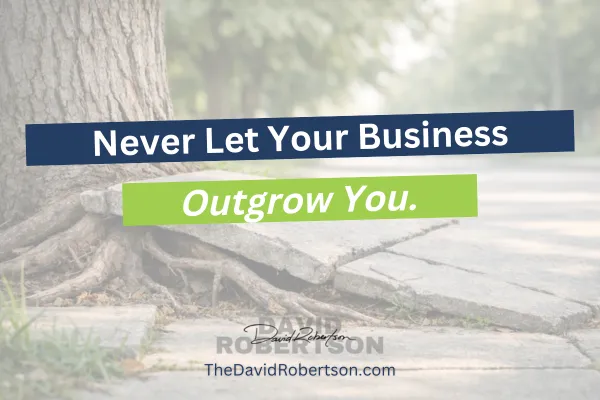
Memo #1 - Never Let Your Business Outgrow You
Founder’s Memo #1
Never Let Your Business Outgrow You!
Fifteen years ago, I wrote a weekly blog called Leather Chair Letters. I sat down at the end of the week, reflecting on my week and how I could grow and how I could encourage other leaders to grow too.
Back then, I had far more conviction than experience.
I believed leadership was mostly about clarity of thought, courage, character and an attitude of continuous growth or improvement. I had not yet signed personal guarantees that made sleep elusive. I had not yet stared at payroll calendars with three different scenarios penciled in. I had not yet watched talented people drift away because a company outgrew the structure holding them.
But I was already wrestling with the same question you may be carrying today:
What actually allows a business to succeed and creates real freedom and profit?
Since then, I have built companies, helped rebuild others, and spent thousands of hours with owners in every emotional state imaginable. Exhausted. Triumphant. Conflicted. Proud. In tears. Quietly wondering whether the machine they created is now bigger than their ability to carry it.
If that thought has crossed your mind even once, pay attention.
That is where most failures begin.
Here is the truth I have learned the hard way:
Your business must never outgrow you.
It will strain you.
Expose blind spots.
Demand a version of you that does not yet exist.
And if you do not expand fast enough to match it, the business will not politely wait.
Concrete vs Plant
When I was a kid, there was a tree planted next to the sidewalk in front of my grandfather’s house. I remember riding my bike and roller blading down the sidewalk, but a crack began to show in the sidewalk.
At first, the concrete barely changed. Just one thin crack from one side to the other. Easy to ignore.
Over time, the sidewalk lifted in places, two or three inches at it's worst. Sections tilted and it make it impossible to skate over it.
Eventually someone had to dig the whole thing out.
They cut channels for the roots, rebuilt the concrete, and gave the tree room to keep growing without destroying what surrounded it.
The tree did not stop growing.
The environment around it had to change.
Businesses are the same as a tree. A business with a good quality product or service will want to grow and it's hard to stop that growth.
But growth that outruns the structure holding it does not remain contained. It pushes. Quietly at first. Then visibly. Then expensively.
What begins as hairline fractures in culture, cash flow, and decision making eventually becomes damage you cannot ignore.
What I Mean by “Outgrowing You”
When I say your business must never outgrow you, I am not talking about effort.
You already work hard.
I am talking about capacity.
Capacity is:
how you decide when stakes are high
whether your identity is fused to the company
how financially fluent you are as complexity increases
how steady you stay when rooms get tense
whether you are building leaders or rescuing constantly
whether intuition is still running things that should now be systems
whether you can release roles you once mastered
Early-stage companies reward heroics. Speed beats polish. Instinct beats process. You being everywhere is not dysfunction, it is survival.
Growth, however, changes the physics.
More people means more interpretation.
More revenue means faster-moving risk.
More customers mean reputation compounds.
More debt means thinner margins for error.
What worked when the business was small becomes dangerous when it is not.
If you stay the same while the company grows, you become the immovable surface everything else presses against.
The Warning Signs You Feel First
From the inside, this rarely feels like collapse.
It feels like being essential.
Meetings multiply. Decisions pile up. Problems repeat themselves with new faces. Everyone still comes to you. You still close the big deals. You still fix the hardest situations.
That dependence is flattering... for a while. Until it becomes a trap.
It is also diagnostic.
When every meaningful outcome runs through your calendar and your nervous system, the business is signaling something clearly:
It is waiting for you to change.
Not in a motivational way.
In a structural way.
More patient.
More systematic.
More financially rigorous.
More willing to trust.
More disciplined about confronting reality early.
More comfortable being less central.
Those transitions are lonely.
They require shedding identities that once made the company work.
What Happens When You Do Not Change
When a company reaches the edge of your current capacity, one of two things happens.
You expand.
Or pressure accumulates.
That pressure does not dissipate on its own.
Sometimes it shows up as turnover. Sometimes as stalled margins. Sometimes as brittle cash flow. Sometimes as reputational damage. Sometimes as a buyer quietly stepping away.
The longer growth outruns leadership, the more destructive the eventual correction becomes.
Why This Is a Stewardship Issue
Your business is not abstract. It carries families, careers, suppliers, communities, and reputations inside it. Every payroll run represents someones grocery bill, mortgage, tuition, medical plans.
Ownership is moral weight.
If you allow yourself to become the constraint, that weight eventually lands on everyone else.
That is not accusation.
That is the job.
The strongest founders I know treat their own development as a fiduciary responsibility. They invest in themselves before the balance sheet forces them to.
Why I Am Writing These Memos
I am returning to weekly writing for the same reason I wrote Leather Chair Letters years ago.
Because these questions matter.
Because you, a founder, shoulder pressures most people never see.
Because building something that lasts requires more than clever tactics.
These memos are not forecasts.
They are field reflections.
Notes from rooms where real decisions get made.
If you are building something large, complex, and meaningful, my hope is that these give you language for tensions you already feel and courage for changes you know are required.
For now, hold this:
Your business must never outgrow you.
Everything else is downstream of that.
Your Friday Founder’s Memo Challenge
Do this before next Friday.
Block thirty quiet minutes. No phone. No email.
Write down:
The three decisions only you currently make
The three problems people always bring to you
The three roles you have not meaningfully delegated
The one area where the company has outgrown your current skill set
The one way you know you must change for the next stage
Be honest.
Not for your team.
For you.
Growth never starts with a new org chart.
It starts with the founder deciding not to become the hard surface everything else breaks against.
For your success,

David Robertson


Let's
Connect.
Have a question or want to connect with me?
David Robertson is a serial entrepreneur, investor, and coach passionate about Advancing the Kingdom of Christ in business.
© David Robertson | All Rights Reserved | This Site Designed by GrowthpointCRM™
Disclaimer:
All content on this website is authored by David Robertson, an experienced business consultant. The views and opinions expressed are his own and do not reflect those of any current or former employers, including International Services, Inc. (ISI) or its affiliates. Professional consulting services are currently provided exclusively through ISI or its affiliated companies. Employment statuses and affiliations are subject to change without notice.
Any investments or investment activities mentioned are conducted solely through Robertson Equities, LLC. and are not associated with or endorsed by ISI or its affiliates. ISI and its affiliates are not responsible for the content on this website or any online activities conducted by David Robertson.
David Robertson makes no representations as to the accuracy or completeness of any information on TheDavidRobertson.com or from any links found on this site. He will not be liable for any errors or omissions, nor for the availability of this information.